🧭 Start with the Guided View
This article includes a structured breakdown. Grasp the core arguments and key points before diving into the full text.

This article includes a structured breakdown. Grasp the core arguments and key points before diving into the full text.
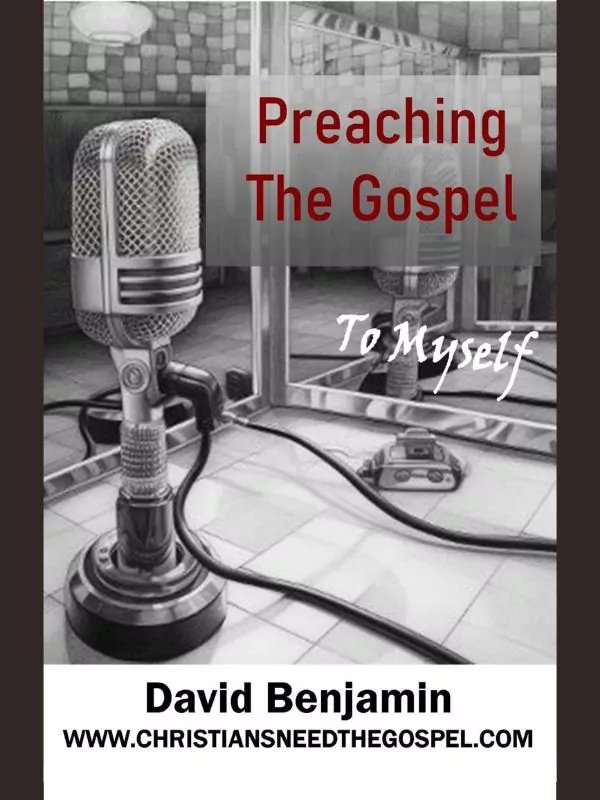
The phrase “preaching the gospel to yourself” is often misunderstood, dismissed as nothing more than empty repetition—a mantra for the anxious or the undisciplined. But this is a grave error. To reduce the ongoing ministry of the gospel in the believer’s life to mere words is to gut the very power God has ordained for your assurance, transformation, and sonship. The gospel is not a formula to be recited; it is the living, covenantal announcement of what Christ has accomplished, and it is the only ground for your confidence before God.
Scripture is unambiguous: “I am not ashamed of the gospel of Christ, for it is the power of God unto salvation to everyone who believes… For in it the righteousness of God is revealed from faith to faith” (Romans 1:16-17). The gospel is not merely the entry point to the Christian life. It is the ongoing power that sustains, assures, and transforms. If you confine the gospel to your conversion moment, you sever yourself from the very source of daily strength and assurance. You exchange the living stream of Christ’s finished work for the stagnant pool of your own efforts and feelings.
The gospel reveals a righteousness that is entirely apart from your performance. It is God’s righteousness, manifested in Christ and credited to you. This is the only foundation that can bear the weight of your conscience and silence every accusation. To “preach the gospel to yourself” is to continually return to this foundation, refusing to let your standing before God be determined by your fluctuating works or emotions.
This is not mantra repetition. It is a deliberate, faith-filled meditation on every good thing that is now yours in Christ. Philemon 1:6 is explicit: “That the fellowship of your faith may become effectual by the acknowledging of every good thing which is in you in Christ Jesus.” You are not called to rehearse your failures, but to confess your inheritance. This is how the fellowship of your faith becomes powerful and effective.
Let the word of Christ dwell in you richly (Colossians 3:16). This is not a suggestion, but a command. It means allowing the deep truths of Christ’s death and resurrection to saturate your mind and heart, not as abstract doctrine, but as the living reality that defines your relationship with God. When you do this, you are not merely repeating facts—you are being transformed by the wisdom and power of God.
If you reduce “preaching the gospel to yourself” to empty repetition, you forfeit the very assurance, power, and identity that God intends for you. You remain on the surface, never entering into the riches of Christ’s finished work. Your Christian life becomes fragile, tossed by every accusation and every failure, because you have abandoned the only ground of confidence: Christ Himself.
Worse, you subtly shift your trust back to your own performance or feelings. This is not a minor error. It is a denial of the covenantal promise and a collapse of justification by faith. If your assurance is not rooted in the gospel, it will inevitably be rooted in something else—your works, your emotions, or your religious zeal. All of these are shifting sand. Only the gospel is the power of God unto salvation and the revelation of His righteousness.
To preach the gospel to yourself is to agree with God’s testimony concerning His Son. It is to remind yourself, daily and deliberately, that your conscience has been purged by Christ’s blood, that you are sealed with the Holy Spirit, and that your inheritance is secure. This is not self-talk; it is covenantal proclamation.
As you let the word of Christ dwell in you, the Spirit bears witness with your spirit that you are a child and heir of God. You find your confidence and identity not in your fluctuating performance, but in the unchanging reality of Christ’s finished work. This is the only path to a vibrant, assured Christian life.
Do not settle for superficial engagement. Refuse to let the gospel become a slogan or a ritual. Make it your daily practice to meditate on, confess, and rejoice in every good thing that is yours in Christ. This is the discipline that grounds you, transforms you, and keeps you in the power and assurance God has provided.
Anything less is not merely inadequate—it is a departure from the very heart of the Christian faith.
Books are the permanent organized form of this teaching. Browse print books or name-your-price ebooks.