🧭 Start with the Guided View
This article includes a structured breakdown. Grasp the core arguments and key points before diving into the full text.

This article includes a structured breakdown. Grasp the core arguments and key points before diving into the full text.
The central vision of Scripture is not a scattered set of spiritual experiences, nor a patchwork of individual achievements. The Bible’s unifying theme is God’s building—a spiritual, corporate edifice composed of believers united in Christ. This is not a metaphorical flourish; it is the very heart of God’s purpose from Genesis to Revelation. If you miss this, you will inevitably misread sanctification, ministry, and even the meaning of the Christian life itself.
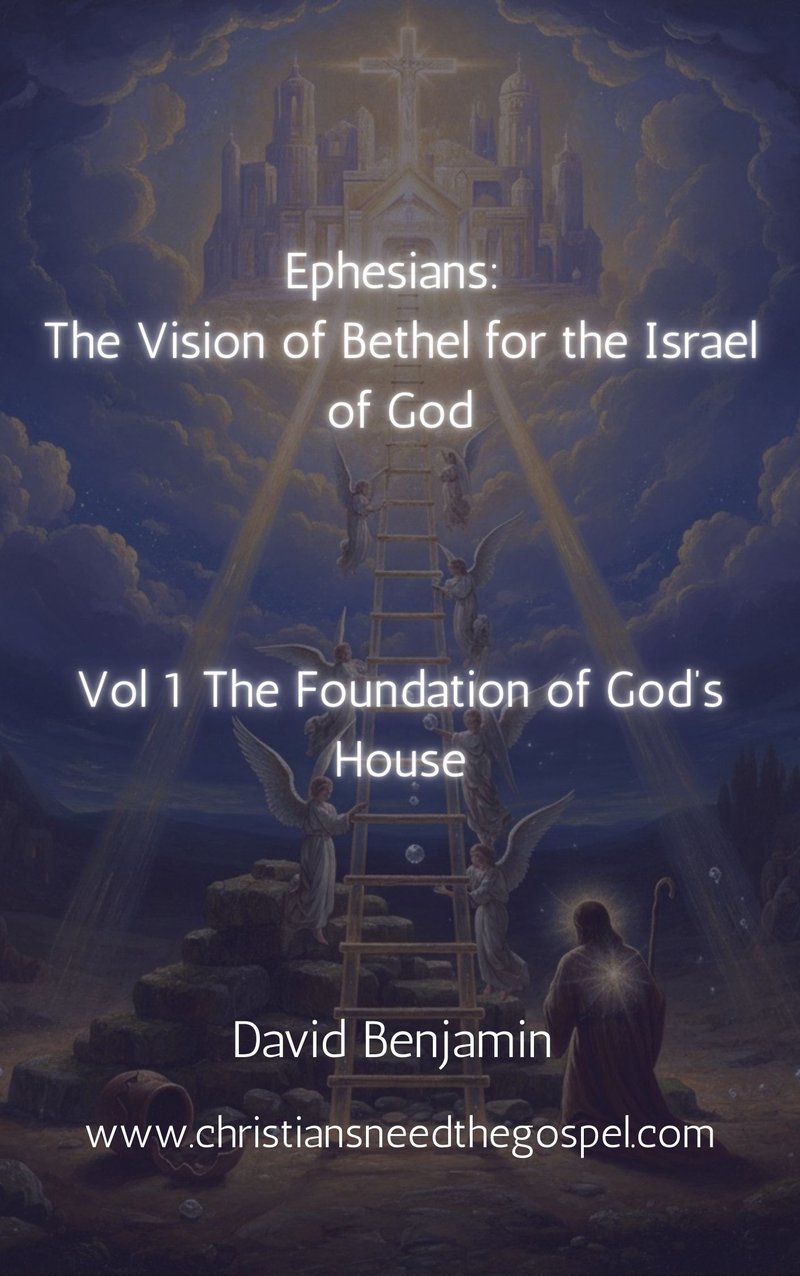
God has never left His intentions ambiguous. From the Garden of Eden, where gold, precious stones, and the tree of life appear, God was already foreshadowing His desire: a dwelling place among a people built together in Christ. Abraham was not a spiritual drifter; he sought a city with foundations, whose builder and maker is God. Jacob’s vision at Bethel was not merely personal encouragement—it was a revelation of Christ as the house of God. Moses received the blueprint for the Tabernacle, a shadow of God’s intent to dwell in man. David’s zeal for the house of God was not nostalgia for religious architecture, but a prophetic anticipation of Christ, the Son, building God’s eternal house. All these types converge on one reality: God’s building is Christ Himself as the cornerstone, and believers as living stones joined in Him.
To treat these Old Testament symbols as mere history is to miss their function: they point to Christ and the ultimate spiritual building. This is not an optional reading; it is the apostolic interpretation (Hebrews 11:10, Genesis 28:10-22, Exodus 25:8-9, 2 Samuel 7:12-16).
When Christ came, He did not merely teach or perform miracles—He became the cornerstone of God’s building. He is the one in whom God and man are united, the reality of the temple, the fulfillment of every shadow. The Old Testament temple, with its glory and subsequent ruin, was always pointing to Christ’s body, the true temple. The prophets’ calls to rebuild were not nostalgia for lost grandeur, but anticipation of the One who would unite heaven and earth in Himself.
Christ’s work is not abstract. He makes His home in our hearts through faith, building us up together as the habitation of God in Spirit (Ephesians 2:20-22, John 14:1-3, John 2:19-21). This is not a private experience but a corporate reality. God’s building is the governing vision of Scripture, the axis around which Abraham, Moses, David, the apostles, and Christ Himself moved.
Believers are not isolated recipients of grace; they are living stones, fit together for God’s house. Ministry is not a professional class or a platform for spiritual performance. Ministry exists to build up the body of Christ, equipping every saint for service within the context of the body. Fruit-bearing and sanctification are not private projects—they are inseparable from the building up of the body. The only context for sanctification is the corporate fellowship of the saints.
If you attempt to pursue sanctification as an individualistic, isolated effort, you will inevitably fall into legalism. You will turn the apostles’ admonitions into law, severing them from the living context of fellowship. This is not a minor error; it is a collapse into self-effort, a denial of the very means God has ordained for transformation. Sanctification is not about becoming “holy” as an end in itself. We were made one with Christ and raised together with Him to be members of His body. Our “reasonable service” is to present ourselves as alive from the dead—within the body—so that we may be transformed and see ourselves as members one of another (Ephesians 4:1-16, Romans 12:4-5).
God is not interested in religious activity for its own sake. The building materials—our spiritual works—will be tested by fire. Only what is wrought in Christ, by the Spirit, and for the building up of the body will remain. These are the eternal, incorruptible works that manifest God’s glory. Everything else will be consumed, no matter how impressive it appeared to men (1 Corinthians 3:12-15).
The New Jerusalem is not a reward for the spiritual elite, nor a distant hope to be spiritualized away. It is the consummation of God’s building—a corporate Person, the Bride of the Lamb, filled with the glory of God. Its content is God Himself; its center is the throne of God and the Lamb; its structure is living precious stones, the saints built together in Christ (Revelation 21:1-27).
Ministry, then, is not a vocation or a title. It is the sharing of Christ’s riches in the fellowship of sons and heirs. Ministers are not professionals—they are stewards, confident in the Father’s abundance, sharing freely with fellow heirs. There is no ministry apart from this fellowship, and there is no sanctification apart from ministry unto the building up of the body.
If you reduce sanctification to a private, individual pursuit, you lose the very context in which God accomplishes His purpose. You exchange the riches of Christ in fellowship for the poverty of legalistic striving. You sever yourself from the building, and thus from the very means by which God transforms and glorifies His people. The result is not merely a less effective Christian life—it is a fundamental departure from the gospel’s logic. You cannot claim the inheritance of sonship while rejecting the context in which the inheritance is dispensed. To divorce sanctification from God’s building is to undermine justification, inheritance, and the finished work of Christ.
The vision is clear and uncompromising: God’s building is the central purpose of Scripture. Christ is the cornerstone; believers are living stones; ministry and sanctification are inseparable from the building up of the body. The New Jerusalem is the goal, and every admonition, every gift, every transformation is for this purpose. There is no other context for sanctification, no other meaning for ministry, and no other vision that will endure the testing of fire.
To see and embrace this vision is to be delivered from legalism, isolation, and spiritual barrenness. To reject it is to lose the very heart of the Christian faith. Let us, then, present ourselves as living stones, alive from the dead, and be built together as God’s eternal habitation in Christ.
Books are the permanent organized form of this teaching. Browse print books or name-your-price ebooks.