🧭 Start with the Guided View
This article includes a structured breakdown. Grasp the core arguments and key points before diving into the full text.

This article includes a structured breakdown. Grasp the core arguments and key points before diving into the full text.
It is a common misreading of Galatians to claim that Paul teaches Christians are the “Israel of God” in the sense of replacing or spiritually becoming ethnic Israel. This error is not minor—it strikes at the heart of how we understand our identity, inheritance, and the very nature of the Christian life. Paul’s argument is not about ethnic status or outward performance, but about the radical transformation that comes only by the Spirit, not by the flesh.
Paul’s teaching in Galatians is relentlessly clear: our place as heirs is secured only in Christ, the promised Seed. “For in Christ Jesus neither circumcision availeth any thing, nor uncircumcision, but a new creature. And as many as walk according to this rule, peace be on them, and mercy, and upon the Israel of God.” (Gal 6:15-16)
In Galatians 3, Paul roots our inheritance in union with Christ. We are heirs together with Abraham not by lineage or law, but because we are in Christ, the true Heir. This is not a matter of outward conformity, but of being made new—a new creature—by the Spirit.
In Galatians 4, Paul draws a sharp line between those who are “children of promise” (like Isaac) and those who are “children of the flesh” (like Ishmael). The distinction is not academic: those who rely on law-keeping for justification or sanctification inevitably persecute those who live by faith. This is the inevitable fruit of the flesh—strife, rivalry, and bondage. To trust in your own religious effort is to align yourself with Ishmael, not Isaac, and to forfeit the peace and mercy reserved for the true heirs.
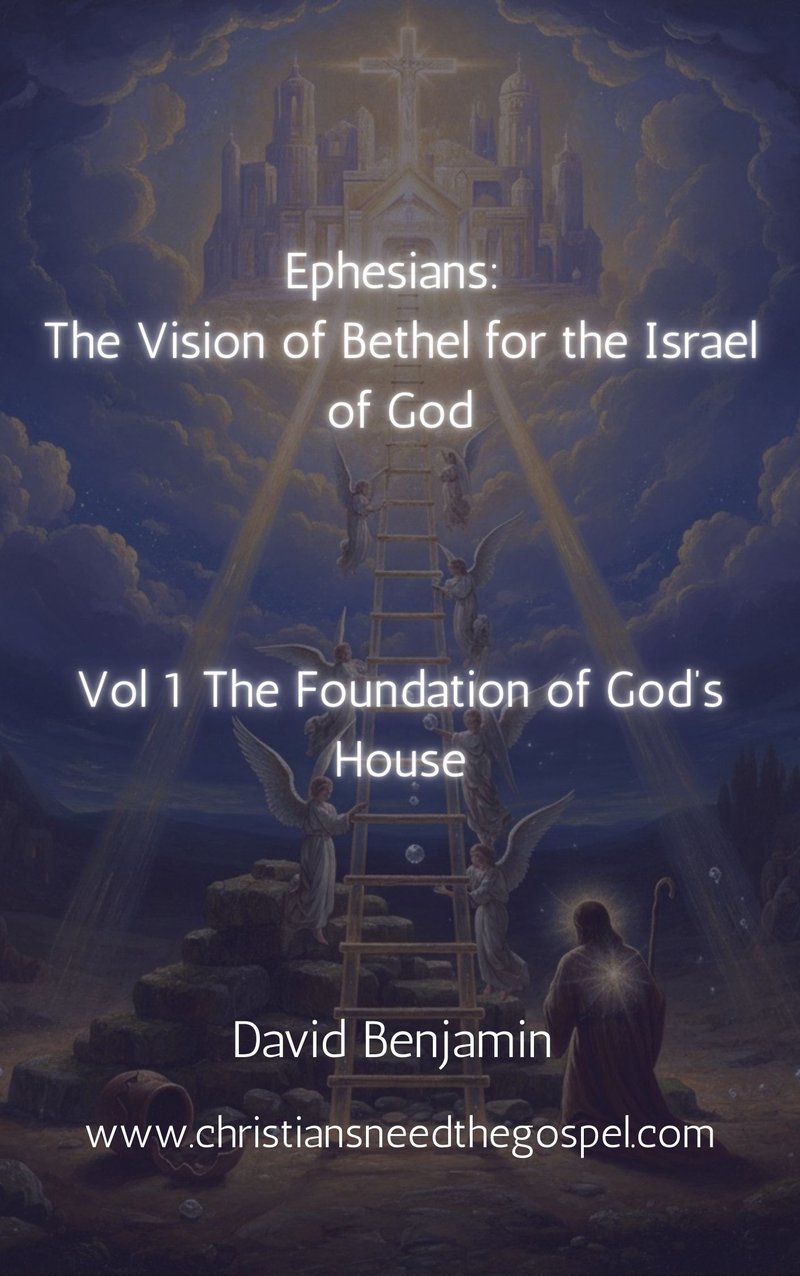
When Paul refers to the “Israel of God,” he is not granting the church a new ethnic title or teaching a replacement theology. Instead, he points us to the transformation of Jacob. Jacob, the schemer, relied on his own strength and cunning to secure blessing. But when he wrestled with God, the Lord crippled his thigh—an act of mercy that forced Jacob into a life of dependence. Only then was he named Israel.
This is not a story of self-improvement; it is a pattern for every believer. God’s answer to the flesh is not to reform it, but to break its power. Jacob’s limp is a type of the Spirit-led life: weakness, dependence, and the end of boasting in the flesh. This is the “rule” Paul insists upon—the new creature, not the old man dressed in religious garb.
Paul’s warning is severe: those who insist on making a show in the flesh—whether by circumcision, law-keeping, or any other outward badge—are not merely misguided. They are enemies of the cross (Phil 3:18), evil workers (Phil 3:2), and stand in direct opposition to the true circumcision, who “worship God in the Spirit, rejoice in Christ Jesus, and have no confidence in the flesh” (Phil 3:3).
To walk according to the Spirit is to accept the sentence of death on the flesh and to live in continual dependence on God. This is not a secondary matter. If you accept the error that our identity or inheritance is secured by anything other than Christ’s finished work, you lose the very foundation of justification, sonship, and the Spirit’s fruit. You exchange the blessing of Abraham for the strife of Ishmael. You trade the limp of Israel for the restless striving of Jacob.
If you accept the notion that the church is the “spiritual Israel” by virtue of outward conformity or religious effort, you undermine the gospel itself. You forfeit the peace and mercy that belong only to those who walk by the Spirit. You abandon the new creation for the old, and you place yourself among those who persecute the children of promise. The inheritance, the assurance of sonship, and the liberty of conscience—all are lost when justification is made to rest on anything but Christ.
The “Israel of God” is not a title to be claimed by the flesh, but a reality produced by the Spirit. It is the mark of those who have been broken of self-reliance, who walk in the weakness that depends on God alone, and who bear the fruit of the Spirit—not the works of the flesh. This is the only rule that counts: new creation, Spirit-dependence, and confidence in Christ alone.
Let no one seduce you with a theology that exalts human effort or ethnic privilege. The cross has put an end to both. The only ground for peace and mercy is the finished work of Christ, received by faith, worked out in the limp of dependence, and crowned with the fruit of the Spirit. Anything less is not just error—it is enmity against the cross.
Books are the permanent organized form of this teaching. Browse print books or name-your-price ebooks.